




|
Comprehensive Eye Examinations
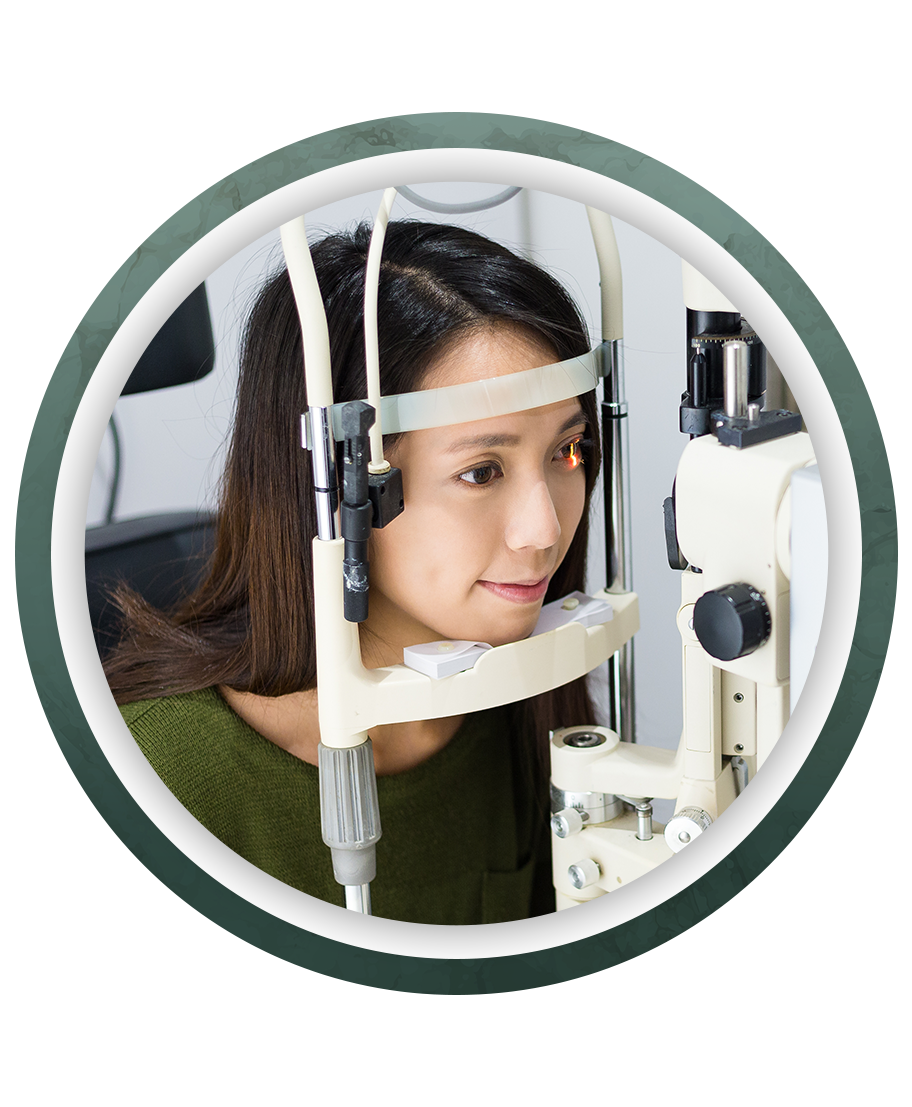
We know your vision is important to you – and it’s important to us. When you come for your appointment, we make sure to schedule ample time for your appointment so you will never feel rushed. Our office provides complete eye care for both adults and children. Our comprehensive eye examinations will check your eyes inside and out for any potential eye disorders or diseases. Your visual skills and abilities are carefully evaluated and appropriate treatment is prescribed, whether it’s medication, lenses, or vision therapy. We are prepared to handle whatever your eyecare needs are, and will treat them with the latest in diagnostic equipment and are committed to keeping up with eye care technology.
Eye Diseases: Cataracts, Diabetes
Cataracts: The natural lens in the eye gradually becomes less clear as we get older. When opacities develop in the lens and the lens gets too hazy, vision will be impaired. Our office can diagnose and manage cataract care. When the cataract affects the vision to the extent that you cannot read or see distant objects comfortably, we will recommend cataract surgery. Our office co-manages with cataract specialists that are proven experts in cataract surgery. Cataract surgery can provide you with a bright new world of vision.
Diabetes: Diabetic patients should have a dilated retinal examination each year. Laser treatments have proven to slow the progression of retinal eye disease for many patients. Diabetes often stimulates the growth of new blood vessels in the back of the eye, which ultimately leak and damage the retina. If this condition is discovered early, laser treatment can destroy these vessels. We have the latest instruments used to detect changes in the back of the eye. If we discover advancing diabetic eye disease that can be treated or needs further evaluation, we will refer you for consultation and further testing to a board certified retinal specialist.
Advanced Glaucoma Detection
Did you know that glaucoma is a leading cause of blindness in the United States? Glaucoma is often called the "sneak thief of sight" because it slowly and painlessly steals away your vision.
Finding glaucoma in the early stages requires more than just the "air puff" test. In fact, about one third of all glaucoma cases would be missed if eye pressures alone were measured. And the "visual fields test," another traditional method of diagnosing glaucoma, can only detect areas of your vision that are already permanently blind.
As part of our ongoing commitment to provide you with the best vision care available, we are proud to offer a revolutionary new technology: the Zeiss GDx. This state-of-the-art laser scans 36,000 discrete points on your retina. These measurements are then analyzed by the computer and compared with those of healthy glaucoma-free patients. With the Zeiss GDx, we can detect glaucoma sooner, while there is still time to prevent vision loss.
One million Americans have glaucoma and are about to lose vision without knowing it simply because glacoma has no symptoms or pain. That's why it's so important to check for glaucoma now!
Don't let the "sneak thief of sight" sneak up on you.
Surgery Co-Management
Our office provides many of the surgical services such as Cataract surgery, Laser surgery, Refractive surgery and Strabismic surgery. We offer this in conjunction with the hospital and local eye surgeons.
Additionally, we have working arrangements established with other specialized eye care doctors to manage such things as retinal detachments, retinal tears and hemorrhages.
Laser Vision Correction
Most people with vision correction issues are wanting to know more about LASIK and whether it is right for them. Here is a brief description of the procedure;
A flap is surgically cut in the cornea and gently folded back. An Excimer Laser is used to reshape the cornea into a flatter shape (this is much like a contact lens corrects vision by forming a new shape on the cornea). The flap is then put back in place, acting like a natural bandage. The healing process is quick and the discomfort level is quite low.
People will often say that they did not feel anything, and could see well the very first day. Most people have improved vision in 24-48 hours. but it must be noted that each person will heal at a different rate. Vision, although greatly improved immediately after surgery, often continues to improve for some weeks, even months.
LASIK is not for everyone. People's eyes are different so even though you may have had a friend who has had LASIK, it may not be the best course of treatment for you. If you are interested in laser vision correction, we will be happy to guide you in picking the right surgeon, procedure and laser appropriate for you.
After the procedure, we take great care to monitor your eyes and adjust your medication for the best possible results.
Eye Infections, Eye Injuries, Dry Eyes
Our office provides emergency services for eye infections and eye injuries. Our staff will work with you to schedule an appointment as soon as possible. State of the art microscopes allow us to examine the front surface of the eye and facial areas around the eye for infection or injury. After assessing the extent of the injury or infection a treatment plan will be formulated and explained to you. Treatment may include medications and supportive care. Follow-up visits to monitor your recovery will be scheduled as needed.
Dry Eyes: Symptoms include scratchy eyes, burning, mild redness and gritty feeling eyes. Oral medications, reading, computer tasks and dry environments may aggravate marginally dry eyes. Dry eyes can be diagnosed by using dyes to observe tear patterns, evaluation of the amount of tears on the front of the eye and from review of your symptoms. Treatment may include artificial tears; eye drops for treating allergies; and/or punctal plugs inserted in the tear drainage canals.
|